
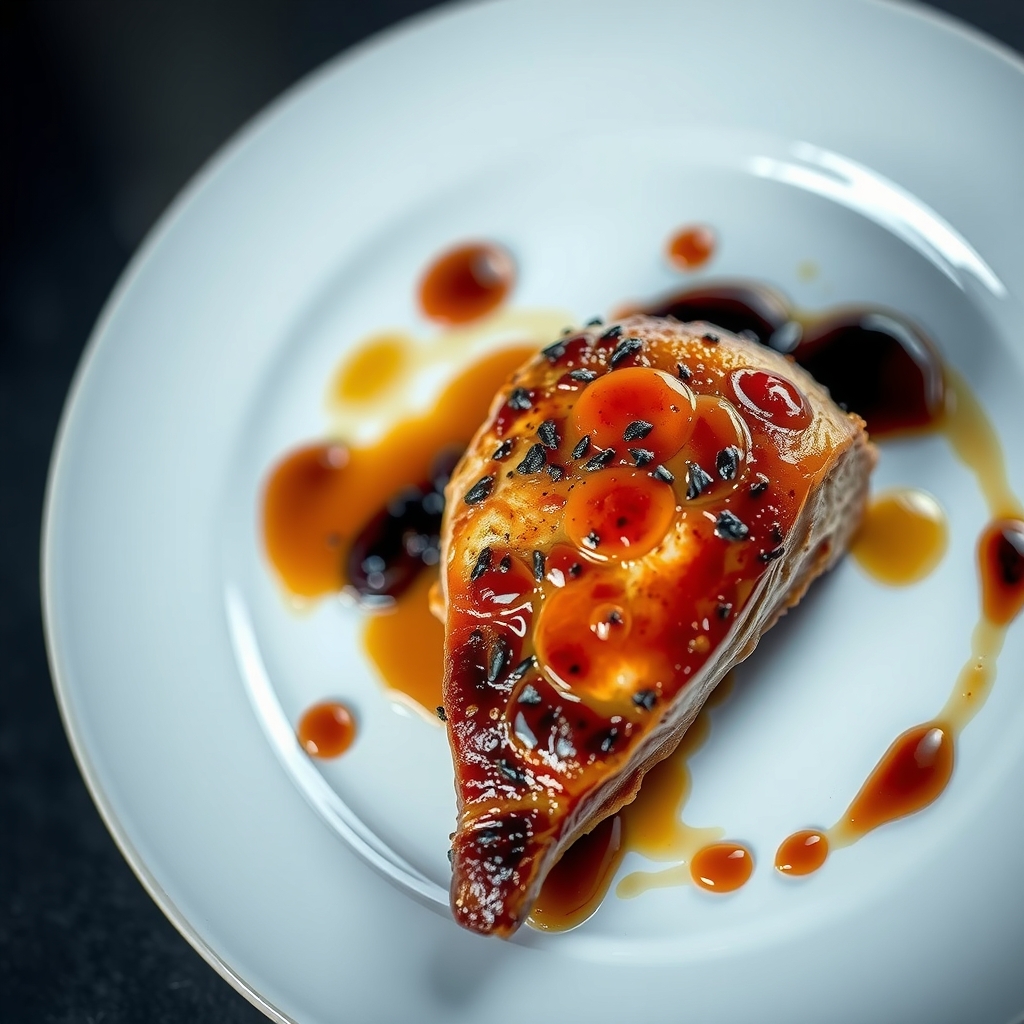
Most people see a deep brown crust and call it “caramelised.” Technica
Most people see a deep brown crust and call it “caramelised.” Technically, that is often wrong.
**A Maillard crust is not the same as caramelisation.**
The Maillard reaction occurs when **amino acids and reducing sugars** react under heat. It creates hundreds of new flavour and aroma compounds, producing notes that can be roasted, nutty, savoury, meaty, toasted, or intensely complex. This is what helps give a properly seared steak, roasted coffee, toasted bread, fried chicken, and browned vegetables their characteristic depth.
**Caramelisation, on the other hand, is the thermal breakdown of sugar itself.** It does not require amino acids. As sugar is heated, it melts, decomposes, and forms new compounds with flavours ranging from buttery and toffee-like to bitter and burnt.
They can happen at the same time, but they are not the same chemical process. A steak develops its crust primarily through the Maillard reaction, while the browning of a sugar syrup is primarily caramelisation.
For a stronger Maillard crust, focus on four things:
**Dry the surface:** moisture creates steam and slows browning.
**Use sufficient heat:** the surface must become hot enough for browning to accelerate.
**Avoid overcrowding:** too much food lowers the pan temperature.
**Give it time:** constant movement can prevent proper contact with the cooking surface.
Salt, seasoning, marinades, pH, cooking temperature, and the type of sugar or protein all influence the final result. However, the most important practical lesson is simple: **dry surface, hot pan, good contact, and patience.**


Comments